

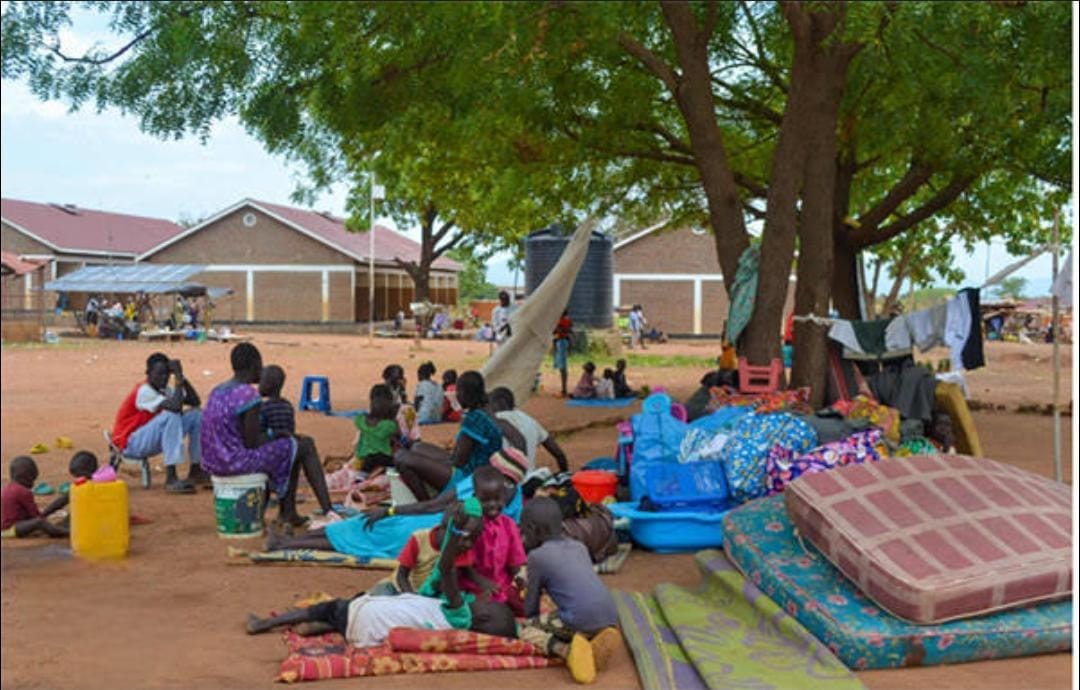
Uganda, Africa’s largest refugee-hosting country, is intensifying efforts to reinforce its national health system as it continues to serve more than 1.92 million refugees living in settlements across the north, southwest and in Kampala.
Despite declining humanitarian funding, the government says it remains committed to delivering equitable and culturally responsive health services to both refugees and host communities as part of its broader Universal Health Coverage agenda.
At the centre of this approach is the Health Sector Integrated Refugee Response Plan (HSIRRP 2025–2029), which embeds refugee health services within Uganda’s mainstream public health system rather than relying on parallel humanitarian structures.
Health authorities argue that this integration promotes sustainability, strengthens national ownership and improves service coordination. However, shrinking financial support is placing mounting pressure on already stretched facilities.
To strengthen the capacity of frontline health workers serving diverse and often vulnerable populations, the World Health Organization (WHO) introduced the Refugee and Migrant Health: Global Competency Standards for Health Workers through its Health and Migration Programme in collaboration with the WHO Health Workforce Department.
The standards emphasize culturally sensitive, ethical and evidence-based care tailored to displaced populations.
In Uganda, WHO worked closely with district health teams to adapt the standards to the local context, develop training materials and support nationwide implementation.
In 2025 alone, Uganda trained 560 health workers — including 60 at national level and 500 across refugee-hosting districts — on both the global competency standards and the Expanded Programme on Immunisation curriculum.
The training focused on strengthening skills in cultural competence, communication, ethics and immunisation service delivery, particularly in densely populated refugee settlements.
An additional 200 health workers stationed at points of entry were trained in screening, early disease detection, and infection prevention and control to enhance preparedness against cross-border health threats.
To promote long-term sustainability, WHO and the Ministry of Health partnered with leading academic institutions — Makerere University, Gulu University, Kampala International University and Mbarara University of Science and Technology — to integrate migrant health competencies into pre-service training curricula.
This move aims to institutionalize refugee and migrant health training within Uganda’s education system rather than relying solely on short-term workshops.
Policy-level engagement has also intensified. Members of Parliament on the Health Committee, officials from the Office of the Prime Minister and senior Ministry of Health leaders have held discussions on safeguarding refugee health services amid tightening national and donor budgets.
Capacity-building efforts have extended to UN agencies such as UNHCR, UNICEF and UNFPA, as well as non-governmental organizations including Medical Teams International (MTI), the International Rescue Committee (IRC) and Baylor Uganda.
A total of 22 partner staff were trained under the global competency framework to strengthen coordination and technical alignment.
At the settlement level, community health workers and translators continue to play a critical role in bridging cultural and language barriers.
Recent assessments indicate that this localized approach has strengthened district-led service delivery, even as external support declines.
Despite these gains, significant challenges remain. Health facilities face shortages of specialized professionals, particularly in mental health services.
Many health workers still lack migrant-specific competencies, and uncertain financing threatens the continuity of training programmes and service expansion.
Health leaders have warned that sustaining refugee health services will require stronger domestic investment if humanitarian funding continues to shrink.
WHO has recommended expanding continuous professional development, institutionalizing training within district systems and securing long-term financing through national budgets, innovative insurance models and carefully managed donor transitions.
“The sustainability of refugee health services depends on deliberate investment in people and systems,” a health sector official said.
“Skills transfer from humanitarian actors to government structures must be planned and monitored.”
Uganda’s integration of refugee health into national systems is widely regarded as a regional model. From strengthening border health services to enhancing community-based care delivery, the country has made measurable progress.
However, achieving truly inclusive Universal Health Coverage for refugees, migrants and host communities will require sustained political commitment and predictable financing.
As the humanitarian landscape evolves, Uganda’s challenge remains clear: consolidate current gains into long-term, system-wide resilience capable of withstanding future pressures.
